
What Cattaraugus County Property Tax Records Show
PARAGRAPH - Research §3. The fields on a Cattaraugus County tax record and what each means for an owner.
| Field | What It Shows | Where |
|---|---|---|
| Assessed value | Value used for taxes | ASSESSOR |
| Market / appraised value | Estimated full value | ASSESSOR |
| Exemptions | Homestead, senior, veteran | ASSESSOR |
| Tax bill & status | Amount due, paid/delinquent | TREASURER |
| Taxing districts | School, city, special | TREASURER |
Assessed value is not market value, and neither one is the tax bill.
Looking Up a Cattaraugus County Tax Bill
To find a tax bill, search Cattaraugus County property records by address or by parcel number. The county's online property search returns the bill amount, payment status, and the parcel details for each property.
- Open the county tax-bill records and search by the available parcel reference
- STEP 2 - read the current bill, prior years, and payment status
- STEP 3 - check exemptions applied on the assessor record
- STEP 4 - note delinquency and any tax lien or pending sale
- Assessed value
- Definition - the taxable portion.
- Mill rate / levy
- Definition - how the tax is computed.
- Homestead exemption
- Definition - owner-occupied relief.
- Tax lien
- Definition - claim for unpaid taxes.
Appealing a Cattaraugus County Assessment
A Cattaraugus County owner who disagrees with an appraisal can contest the assessed value before the review board. Meeting the filing deadline and bringing deed records or comparable sales strengthens the appeal.
Appeal window. Use the local assessment calendar and RP-524 instructions for Grievance Day; a late complaint generally must wait for the next available review cycle.
Cattaraugus County Assessment Rolls and Tax Bills
Three county sources answer three different questions. The assessment roll identifies the current owner, mailing and property locations, tax-map number, deed reference, land and total assessments. It also lists estimated full-market value, exemptions, and taxing districts. The tax-bill material carries the levied charge and payment context. Sales spreadsheets preserve transfer facts. Keep the roll year, valuation date, and tax period attached to every figure. Blending numbers from different cycles is the fastest way to a wrong conclusion. It can mislead you about a property. The county tax-bill page organizes the official bill material in one place. Start there when the question is what was levied on a parcel.
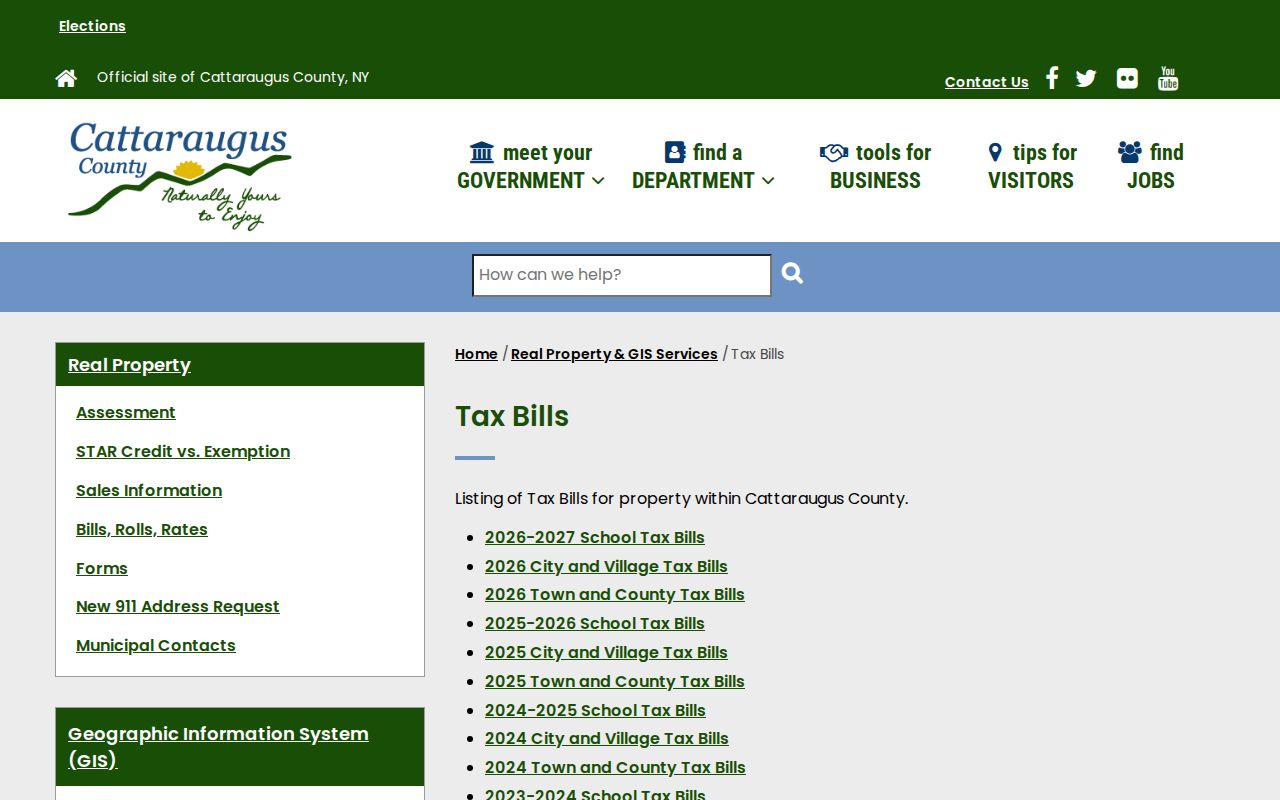
The county tax-bill index is a document route, not a live balance search.
Equalization and Cattaraugus County Property Tax Values
New York equalization rates translate local assessed values into full-value estimates. That translation is why a raw assessment is not a sale appraisal. The Olean roll sits at an 88.00 rate. A Salamanca school roll runs at 11.75. A $100,000 assessment in one jurisdiction therefore cannot be weighed against the same figure in the other without the roll context. Land assessment, total assessment, full-market estimate, taxable value, and recorded sale consideration remain distinct fields. Each one appears on every Cattaraugus County property record.
Exemptions change the taxable result without touching the property's sale history. STAR credit and STAR exemption are separate programs, with different mechanics. Amounts and eligibility shift by cycle, so confirm them for the current 2026-27 period. Veteran and other exemptions should be read from the relevant roll. Confirm them with the assessor rather than inferring from a prior owner's entry.
Correcting a Cattaraugus County Assessment
Start any correction by verifying the parcel. Check the inventory, the assessment, the exemptions, and the taxable jurisdiction. New York's RP-524 is the formal complaint form. It is filed with the local board of assessment review. Grievance Day follows the municipal calendar. RP-554 addresses correction of certain roll errors. RP-556 is the route for a tax credit or refund in qualifying cases. It carries its own timing limits, including the documented three-year framework. These routes are not interchangeable, so match the form to the problem.
Reassessment work is scheduled for Ashford, East Otto, Mansfield, and Red House in 2026. That timing makes the roll year especially important in those towns. Save the notice, the tentative or final roll entry, supporting sales, and proof of the filing date. A recently recorded sale can surface in the Clerk's index before the roll changes. So a mismatch between deed and roll does not by itself signal an error. The county assessment landing page carries reassessment information and roll access.
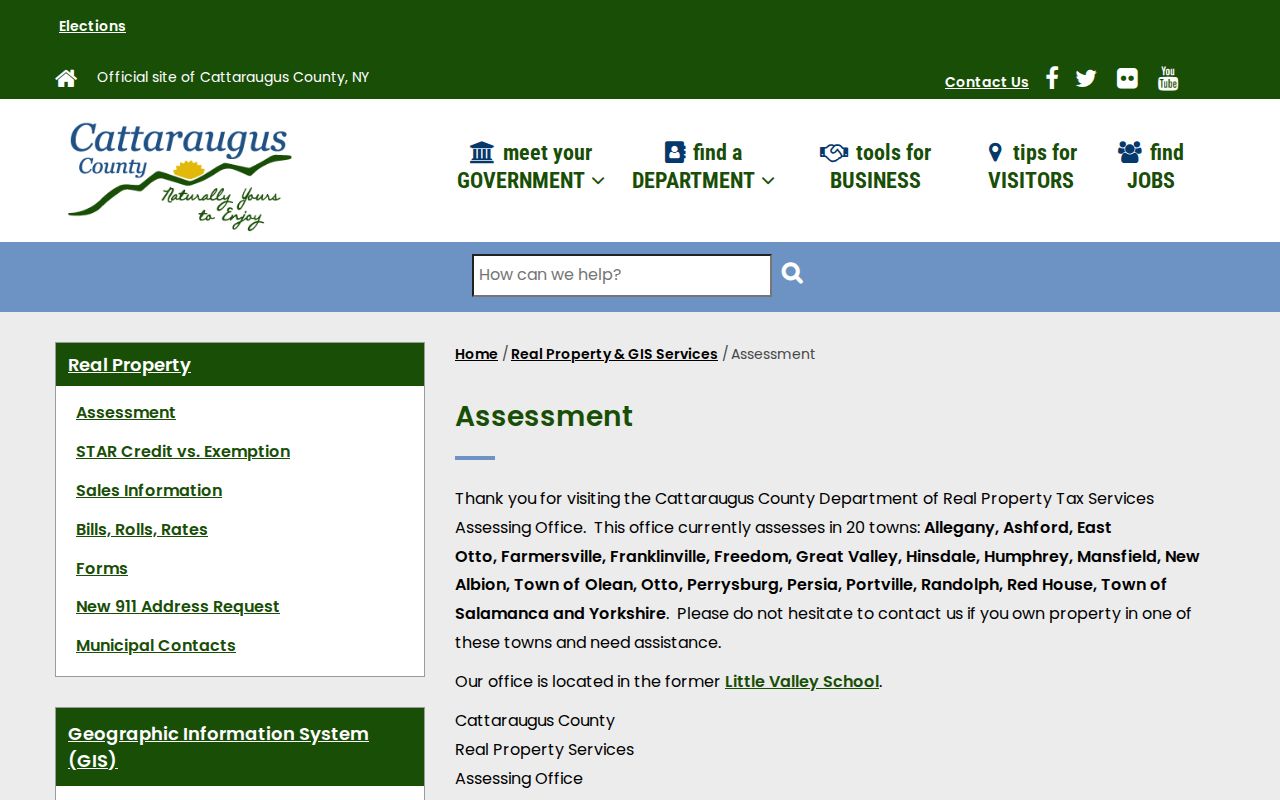
Recheck the roll once the tentative version advances to final.
Follow Cattaraugus County Delinquency Records Separately
A final assessment roll and a current collection record are not the same thing. Use the county tax-bill material for the levy, payment context, delinquency notices, and auction information. Verify a live payoff with the responsible collector or Treasurer. One property can carry several taxing jurisdictions and tax periods. Keep county, town, city, village, and school entries separate.
Tax-sale and auction publications are event records, not a substitute for the deed index. A notice identifies an owner and parcel as of the day it was prepared. Payment, withdrawal, court action, or later recording can change the outcome entirely. Check the most recent notice. Ask the Treasurer for status before relying on an older PDF. After a completed transfer, the County Clerk record establishes which instrument was recorded.
Watch the mail, too. Cattaraugus offices have warned about private solicitations. These sell deed or tax-document copies for $80 or more. A high-priced mailing is not a county bill just because it quotes public parcel facts. Compare the return address and payment instructions against the official county source before paying anything.
Build a Cattaraugus County Tax-Year Timeline
Put every tax-year event in date order. Include the valuation date, the tentative roll, the final roll, the levy, the due date, payment, corrections, and refunds. Add the deed date only as ownership context. That discipline stops a later sale from being used to rewrite an earlier tax year. It also keeps a current exemption from being assumed on a prior bill. Keep the roll page in one file. Add the bill or index reference, the exemption entry, and any assessor correspondence to it.
For a grievance, save the comparable sales and inventory evidence you submitted with RP-524. For a clerical correction or refund request, preserve the form. Also preserve the statutory route, the filing date, and the determination. Remember that the local assessor, the board of assessment review, the collector, and county offices each play a different role. When you explain a result, say what each number is. Say whether it is assessed, full-market, taxable, billed, paid, delinquent, credited, or refunded. Those labels matter more than a bare dollar amount. Confirm live balances and deadlines with the responsible office.
STAR questions call for distinguishing the credit from the exemption. Use the current state and local instructions. Veteran and other exemptions likewise depend on the program. The owner facts and the filing cycle matter too. Never copy an exemption from a neighboring parcel or a prior owner's roll. After a transfer, ask how it affects the next roll and bill. Do not assume the prior taxable result simply continues.
For any appeal or correction, use the official form version and calendar in effect for that year. A saved web summary is not proof of timely filing. Get a receipt or other submission record. Keep the evidence actually provided. Retain the written determination with the parcel's tax-year timeline. Never estimate a fully current payoff from an old bill, auction notice, or spreadsheet. Ask the collector for the amount and its effective date. Keep that confirmation with the parcel record.