
How to Find Who Owns a Cattaraugus County Property
The reliable route starts from an address or an owner name. Pull the current roll entry, copy the tax-map number, and then match it to the newest recorded deed so the owner of record rests on both records rather than one.
- STEP 1 - search the address in the Cattaraugus County Real Property and GIS assessment records for the owner of record
- Confirm the grantee on the latest deed in the County Clerk Cott index
- STEP 3 - if owned by an LLC or trust, look up the entity with the Secretary of State
- STEP 4 - use the owner's mailing address on the tax roll to reach them
Where Cattaraugus County Owner Information Comes From
Several offices publish Cattaraugus County ownership details. The assessor's roll lists the owner of record and the tax map ties each parcel to a number, while the Clerk's deed records carry the signatures and dates behind every transfer.
| Source | Owner Info It Gives | Access |
|---|---|---|
| Assessor / tax roll | Owner of record, mailing address | Free portal |
| Recorder deed index | Grantee on the latest deed | Index free |
| Secretary of State | LLC/entity officers and agent | Free |
| GIS parcel viewer | Owner name per parcel | Free viewer |
PARAGRAPH - owner of record vs occupant, and why they can differ.
What "Who Owns This Property" Cannot Tell You
Public records answer the ownership question, but only part of it. They name the owner of record on the roll and the grantee on the deed. They cannot confirm who lives at the property, and they are not a title search. New York privacy protections also apply. They limit what an assessor or recorder will release about individual owners.
Lawful use. 1-2 sentences - a Cattaraugus County owner lookup is for property research and due diligence; using owner information to harass or intimidate anyone is a crime under New York law.
The Four-Record Cattaraugus County Ownership Route
Begin with the address in the current assessment source. Copy the tax-map number and the Current owner field. Open that same parcel in the county GIS map to confirm its shape and location, then read the grantee line on the newest recorded deed. Be careful with the mailing address: it shows where tax bills go, not who occupies the land. The deed is the stronger proof of a recorded transfer, though even a deed-index search stops short of a title opinion.
Olean parcels add one wrinkle. The city assessor search works, but heed its weekly-update warning before matching figures against the county roll. For Salamanca, first settle whether the parcel sits inside the city or the Town of Salamanca, and check whether Indian Lease Roll or Seneca Nation map context applies. A ZIP of 14779 alone cannot decide jurisdiction.
Owners Named as LLCs, Trusts, or Estates
The roll often names a company, trust, estate, executor, or trustee instead of a person. Keep that recorded name. Never swap in a guess about a beneficiary. Follow the newest deed plus any related estate record instead. Olean tightened its June 2025 closing process with a natural-owner disclosure rule for LLCs and an assessor countersignature. Yet the County Clerk's recorded instrument remains the essential confirmation point for county property records.
Entity names can look nearly identical. Match on the tax-map number and the legal description, not on the name alone. A Salamanca case shows why the situs and mailing columns must stay separate. An LLC's mailing address can sit outside the county entirely. Use the published tax mailing address for any legitimate property matter. Owner data must never be used to target or harass a person.
Deed Notifications and Cattaraugus County Ownership Claims
A January 2026 change at the County Clerk added a deed-notification step, and a $10 deed rule now serves as a local fraud-prevention checkpoint. Neither makes a private copy solicitation official. County warnings flag letters charging $80 or more for deed or tax documents. Verify any claim with the Clerk and order copies from the custodian directly. The Clerk's notice page carries the local warning.
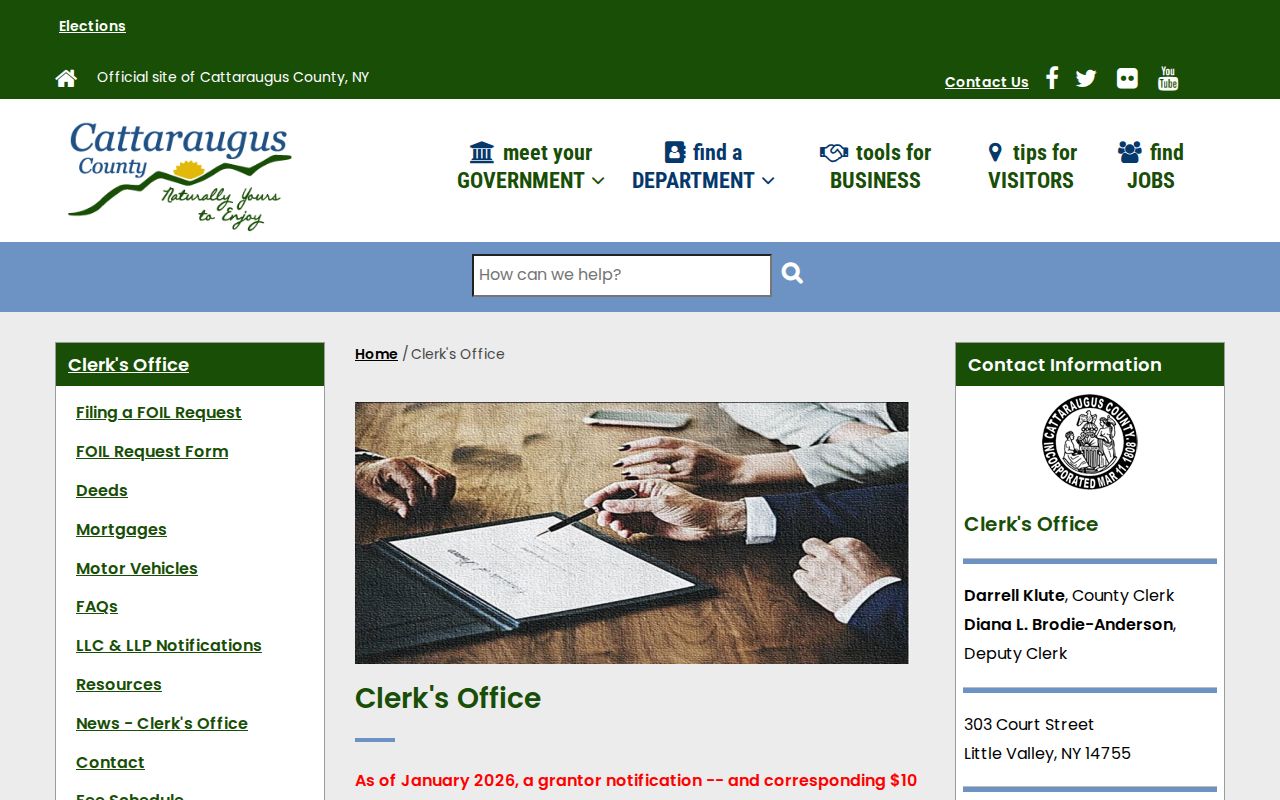
That notice also works as a cross-check whenever an unexpected mailing mentions a recorded ownership change.
Resolve a Roll and Deed Disagreement
Compare dates first. The assessment roll may predate a newly recorded deed. A Cott entry may still be incomplete or unverified. Then compare the tax-map number and the legal description, since similar names alone never prove both records concern the same parcel. Look last for an estate deed, correction, split, or combination that explains the shift. When the answer affects a transaction, ask the Clerk or assessor to confirm the status.
Never turn a mailing address into a claim about residence. The roll publishes it so tax bills and notices reach the assessed owner. A trust, estate, or LLC may receive mail elsewhere. An individual owner may not occupy the property at all. The precise answer to who owns the property is the recorded or assessed party, always qualified by the source and its date.
Use Cattaraugus County Ownership Information Lawfully
Ownership records earn their keep in boundary notice. They also serve purchase research, estate work, tax questions, and contact about the land itself. Use the tax mailing address or a registered business channel. Keep every communication tied to a legitimate property purpose. Do not dig for private resident details the land record does not contain. A map or owner list must never be used to watch a person. It must never be used to threaten or harass one either.
Remember the limits. A public-record lookup is not a title search. Unrecorded interests, indexing delays, estate issues, and document defects can all hide beneath a deed record. It may look clean at first glance. When legal reliance matters, a title professional or attorney evaluates the chain. A licensed surveyor resolves boundaries on the ground. Those limits make the ownership answer more accurate, not less useful.
State the Cattaraugus County Owner Answer Precisely
State the answer with care. Say that the named assessment roll lists a party as Current owner for the identified parcel as of that roll. The newest deed checked names a grantee on its recording date. If the parties differ, report the difference and both dates. Title can sit with an entity or estate. Keep that exact wording. Never name an assumed beneficiary or occupant.
Precision also means naming the municipality. Olean, Salamanca, and the rural towns route a search through different assessment or abstract sources. Even so, every deed is county-recorded. The tax-map number and legal description keep the parcel identity stable across all of them.
Shared addresses are common. When several parcels sit under one mailing address, list each tax-map number on its own. The same care applies to deeds. A single deed can cover several parcels. Say so instead of pinning the full consideration on one lot. Otherwise a quick owner lookup can create a false parcel-level claim.
A dated, parcel-specific answer beats an undated name every time. Do not lift a name from a map label or a mailing.